
Skilled Nominated Visa, Subclass 190
The Skilled Nominated visa is a permanent visa for skilled workers nominated by an Australian state or territory. Each state sets its own criteria and occupation lists, which can change, so choosing the right state and preparing the nomination carefully matters.
The 190 is a permanent visa for skilled workers nominated by an Australian state or territory. Each state sets its own occupation lists and requirements, and they change over time. Nomination also adds points, which is why many applicants who fall short on the 189 look at this visa.
- TypePermanent
- NominationState or territory
- TestPoints, minimum 65
- CommitmentLive and work in the nominating state
Overview
The Skilled Nominated visa (subclass 190) is a permanent visa for skilled workers nominated by an Australian state or territory.
- A state or territory nominates people whose skills match its labour needs, so your occupation and plans matter as much as your points.
- Nomination adds to your points, which can make the 190 reachable when the 189 is very competitive.
- Once granted, you have permanent residence and can generally include eligible family members in the application.
Who this suits
Skilled workers whose occupation is in demand in a particular state or territory
People whose points may be too low for the 189 but who meet a state’s criteria
Applicants who are willing to live and work in the nominating state
Onshore and offshore applicants who have planned their skills assessment and English
Key facts
- Nomination by a state or territory is required
- Permanent residence from grant
- Each state and territory has its own criteria and occupation lists
- You lodge an Expression of Interest (EOI) and wait for nomination and invitation
- Some states expect you to live and work there
Government application fees
Skilled Nominated (190)
Main applicant$6,140
Additional applicant 18+$3,070
Additional applicant under 18$1,535
A second instalment may be payable for applicants aged 18 and over who do not have functional English. Check the current amount with Home Affairs.
These are the Department of Home Affairs charges only. They are indexed each 1 July, so confirm the current amount with the Department before you lodge. Other costs may apply, such as health examinations, police certificates, skills assessments and the Skilling Australians Fund levy. Our professional fees are separate.
Check before you apply
Requirements differ by state and territory
The 190 needs a nomination from a state or territory government, and each one sets its own rules. Meeting the points test is not enough on its own.
- Occupation listsEach state or territory nominates only from its own list of occupations, and the lists change.
- Residence and workSome require you to already live or work in the state. Others invite applicants from overseas.
- Extra criteriaEnglish level, work experience, qualifications and job offers can be set above the national minimum.
- Timing and placesNomination places and opening dates vary through the year, so the rules can change before you apply.
- Living in the stateStates generally expect you to settle and work in the state that nominates you.
We check the current requirements of each state or territory that fits your occupation before you apply.
What you need to qualify
- Your occupation must be on the list of the state or territory you apply to, and each jurisdiction sets and updates its own list.
- You need a suitable skills assessment, English results and enough points, as well as meeting the age limit that applies.
- The state’s own criteria must be met, which can cover work history, residence, ties to the state and the strength of your application.
- You must be prepared to live and work in the nominating state, as states generally expect this of nominees.
- You and any family members included must meet the health and character requirements.
The 190 process
- 01Eligibility review
- 02Skills assessment and English test
- 03Expression of Interest (EOI)
- 04State nomination
- 05Invitation
- 06Lodge visa application
- 07Decision
- 08Permanent residence
Skills assessment
Skills assessment, with our help
A positive skills assessment for your nominated occupation is needed before you can lodge an Expression of Interest (EOI).
Many applicants ask us to help with their skills assessment, because the assessing authority’s rules are strict and a weak application can cost months.
Ask about a skills assessmentAssessing authority fees are set by the authority and are separate from ours.
- The right authorityWe identify the assessing authority and the assessment that applies to your occupation.
- Eligibility firstWe review your qualifications and experience against the requirements before you pay any fees.
- Guidance on your evidenceWe explain what the authority expects, such as employment references and duties, and review what you have gathered before you submit.
- Support to the outcomeWe help you understand and respond to the authority’s requests until the outcome is issued.
Documents you will need
- Passport and identity documents for you and each family member included
- Skills assessment, English test results and your points evidence
- Qualifications and evidence of skilled employment, such as references, payslips and tax records
- Any documents the state requires, such as a resume, evidence of ties to the state or a statement of intent to settle
- Police certificates and health examination results when requested
After the visa is granted
- You hold permanent residence, and the visa has no condition tying you to an employer.
- States generally expect nominees to live and work in the nominating state, so plan your move with that in mind.
- Permanent residence has an initial travel facility, so check the dates before travelling.
- You may become eligible for citizenship once you meet the residence requirements.
How we help
- Compare state and territory criteria for your occupation
- Prepare the Expression of Interest (EOI) and state nomination applications, including Registration of Interest (ROI) applications where required
- Keep your Expression of Interest (EOI) and evidence current
- Lodge the visa application once invited
Common pitfalls
- Choosing a state without checking its criteria
- Letting a nomination or invitation lapse
- Not planning to meet the state’s residence expectations
- Relying on an occupation list that has since changed
Related articles
 Skilled MigrationVictoria Publishes Its Own Points Test: What 190 and 491 Applicants Need to Know (2026–27)Victoria has published the Victorian Points Test (VPT), which ranks every Registration of Interest (ROI) for the 190 and 491 visas in the 2026–27 program year.Read the article
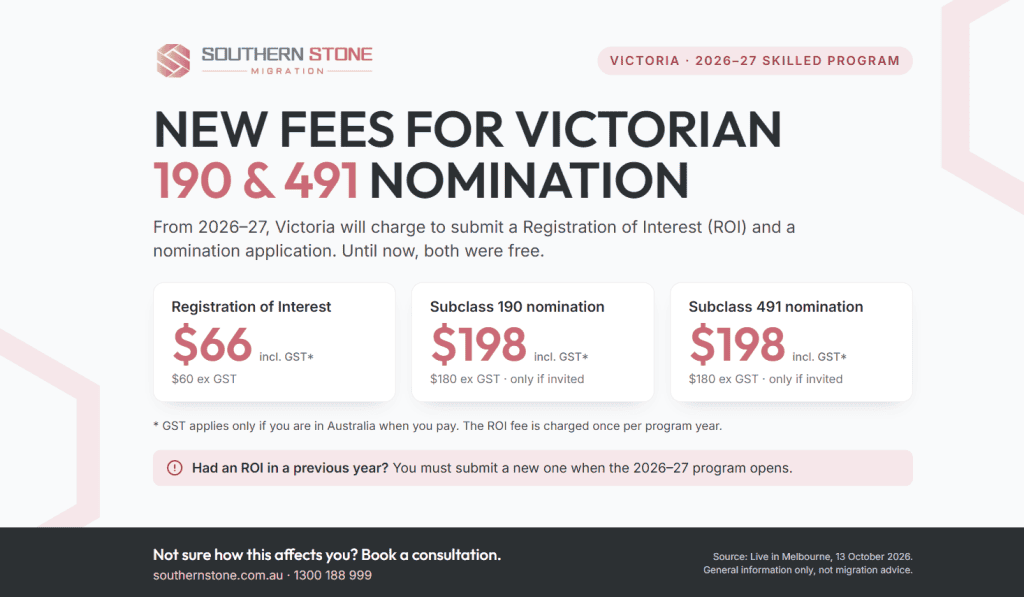 Skilled MigrationVictoria Introduces Fees for 190 and 491 ROIs and NominationsVictoria will charge fees for Registrations of Interest (ROIs) and nomination applications for the Skilled Nominated (subclass 190) and Skilled Work Regional (subclass 491) visas from the 2026–27 program year.Read the article
Frequently asked questions
How does state nomination work?
A state or territory nominates applicants who meet its criteria and fit its labour needs. If nominated and then invited, you can lodge the visa application. Criteria vary by state and change, so we check them for you.
Do I have to live in the nominating state?
States generally expect nominees to live and work there, and expectations differ. We explain what applies before you choose a state.
Is the 190 a permanent visa?
Yes. It gives permanent residence from grant.
How is the 190 different from the 189?
The 189 needs no nomination but is very competitive. The 190 needs a state or territory nomination, which can suit people whose occupation is in demand locally.